Selecting the right speakers for a small room presents unique challenges that differ significantly from outfitting larger spaces. The primary goal is to achieve balanced, clear audio without overwhelming the listening area with excessive volume or boomy bass. Room dimensions directly influence sound wave behavior, leading to potential issues like standing waves, exaggerated bass frequencies, and poor stereo imaging if speakers are not chosen and placed judiciously. This guide details the critical factors to consider, ensuring your audio setup performs optimally within confined environments.
Understanding Acoustic Behavior in Small Rooms
Small rooms, typically defined as spaces under 1,500 cubic feet (e.g., a 10x12x8 foot room), exhibit distinct acoustic properties. Sound waves reflect quickly off nearby surfaces—walls, ceiling, floor—leading to early reflections that can muddy the soundstage and reduce clarity. Low frequencies, in particular, are prone to standing waves, where sound energy builds up in certain areas and cancels out in others, resulting in uneven bass response. This means speakers designed for broad dispersion or deep bass extension without careful consideration can easily over-energize a small space, creating an unpleasant listening experience.
Impact of Room Boundaries: Proximity to walls and corners significantly boosts bass output, a phenomenon known as boundary gain. While this can be leveraged, it often leads to an unnatural, bloated bass if not accounted for in speaker design or placement.
Critical Speaker Specifications for Small Spaces
When selecting speakers for a compact room, focus on specifications that address the acoustic realities of limited space.
Speaker Type and Size
- Bookshelf Speakers: These are often the default choice for small rooms due to their compact footprint and typically well-controlled bass response. Their smaller drivers and enclosures are less likely to over-excite a room's low-frequency modes.
- Satellite Speakers: Extremely compact, often paired with a dedicated subwoofer. They excel in discreet placement but rely heavily on the subwoofer for full-range sound, which adds another component to manage.
- Soundbars: A practical solution for TV audio in small living rooms, offering a wide soundstage from a single unit. They are space-efficient but generally offer less precise stereo imaging and musicality compared to dedicated stereo pairs.
Recommendation: Prioritize bookshelf speakers for dedicated music listening due to their superior stereo imaging and balanced sound. For home theater, a soundbar can be a pragmatic choice.
Sensitivity (Efficiency)
Speaker sensitivity, measured in dB/W/m, indicates how loud a speaker plays with a given amount of amplifier power. In small rooms, high sensitivity speakers (e.g., 90dB+) can quickly reach excessive volumes with minimal power. This means you don't necessarily need highly sensitive speakers, as even moderately sensitive models will play sufficiently loud without requiring a high-powered amplifier. Focus on speakers that sound good at lower volumes.
Frequency Response
While a wide frequency response (e.g., 20Hz-20kHz) is desirable in theory, speakers with overly extended bass (below 50-60Hz) can cause problems in small rooms. The room itself will amplify these lower frequencies, potentially leading to boomy, indistinct bass. Look for speakers with a controlled bass roll-off or those designed for near-field listening, which often have a more reserved low-end to begin with.
Enclosure Design: Ported vs. Sealed
Speakers come in either ported (bass reflex) or sealed (acoustic suspension) enclosures.
Ported designs use a vent to enhance bass output, often making them sound more impactful at lower volumes. However, in small rooms, this can exacerbate bass issues.
Sealed designs typically offer a tighter, more controlled bass response that rolls off more gradually. This characteristic can be more forgiving in acoustically challenging small spaces, as the bass is less likely to become overwhelming.
Best for Small Rooms: Sealed enclosures often provide a more articulate and less boomy bass in confined spaces.
Strategic Speaker Placement in Small Rooms
Even the best speakers will underperform with poor placement. In small rooms, placement becomes even more critical.
- Distance from Walls: Avoid placing speakers directly against walls, especially corners. This minimizes boundary gain, which can cause excessive bass. Experiment with pulling speakers out by 6-12 inches (15-30 cm) from the front wall and at least 1-2 feet (30-60 cm) from side walls.
- Listening Triangle: Position speakers and your listening spot to form an equilateral triangle. This optimizes stereo imaging and soundstage accuracy. For near-field listening (e.g., desktop setup), the triangle will be much smaller.
- Speaker Stands vs. Wall Mounts: Speaker stands decouple speakers from surfaces, reducing unwanted vibrations and allowing precise positioning. Wall mounts save floor space and can be effective if the speakers are designed for such placement and positioned carefully away from corners.
- Toe-In: Angle speakers inward towards the listening position. This can improve imaging and reduce early reflections from side walls, especially in narrower rooms.
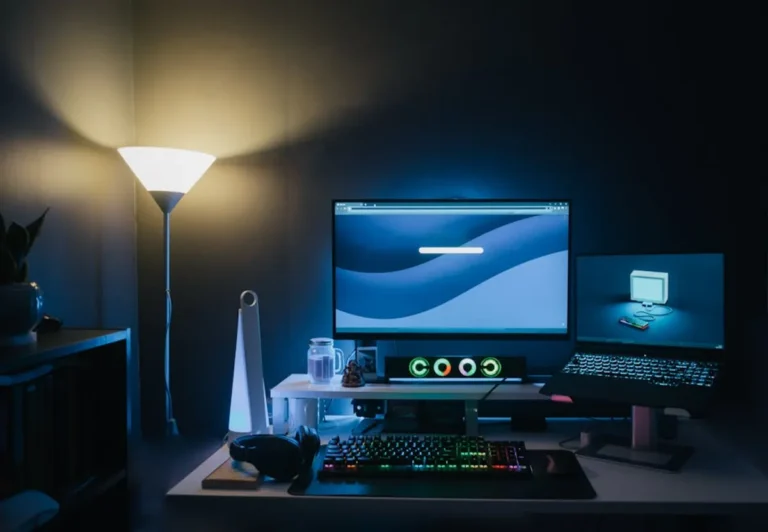
Pro Tip: For small rooms, consider speakers designed for near-field monitoring. These are engineered to sound accurate at close listening distances, often featuring controlled dispersion and a less exaggerated bass response, which translates well to desktop setups or compact listening areas.
Amplification Matching
Matching your amplifier to your chosen speakers is crucial for optimal performance and longevity. In small rooms, you generally don't need an amplifier with extremely high wattage. An amplifier that provides clean power within the speaker's recommended power handling range is sufficient. Overpowering speakers can damage them, while underpowering can lead to clipping (distortion) when trying to reach desired volumes. Pay attention to impedance matching (ohms) to ensure compatibility.
Practical Selection Steps for Optimal Sound
- Define Your Budget: This narrows down options immediately.
- Measure Your Room: Understand the exact dimensions and potential placement points.
- Identify Primary Use: Music, movies, gaming, or a mix? This influences speaker type (stereo pair vs. soundbar).
- Consider Aesthetics: Speakers are part of your room's decor. Choose finishes and sizes that integrate well.
- Audition Speakers: If possible, listen to speakers in a similar room environment or with a generous return policy. Pay attention to clarity, bass control, and soundstage at moderate listening levels.
Refining Your Small Room Audio Setup
Even with carefully chosen speakers, further refinement can enhance your listening experience.
- Subwoofer Integration: If your chosen bookshelf or satellite speakers lack sufficient bass for your preference, a small, sealed subwoofer can be integrated. Look for subwoofers with precise controls (phase, crossover) to blend seamlessly with your main speakers without overpowering the room. Place it strategically to avoid exciting room modes.
- Digital Room Correction (DRC): Systems with built-in or external DRC can measure your room's acoustic response and apply equalization to smooth out frequency peaks and dips, particularly in the bass region. This can be highly effective in mitigating small room acoustic issues.
- Acoustic Treatment: While beyond speaker selection, adding a few well-placed acoustic panels or bass traps can significantly improve sound quality by reducing reflections and standing waves. Start with absorption at first reflection points.
Frequently Asked Questions
Can I use large floor-standing speakers in a small room?
While technically possible, it's generally not recommended. Large speakers, especially those with multiple or large woofers, are designed to move significant air and fill larger spaces. In a small room, they are highly prone to causing boomy bass, overwhelming the soundstage, and creating an unbalanced sound due to room modes.
Do I need a subwoofer for a small room?
Not necessarily. Many well-designed bookshelf speakers can provide sufficient bass for music listening in a small room. A subwoofer becomes more beneficial if you desire deeper bass for movies or specific music genres, but choose a compact, sealed model with precise controls to avoid bass bloat.
How far should speakers be from the wall in a small room?
As a starting point, aim for at least 6-12 inches (15-30 cm) from the front wall and 1-2 feet (30-60 cm) from side walls. This minimizes boundary gain and allows the speakers to breathe. Experimentation is key, as optimal distance varies with speaker design and room acoustics.
What is the ideal speaker type for a small desk setup?
Compact active (powered) bookshelf speakers or dedicated desktop monitors are ideal. They often feature built-in amplification optimized for their drivers, are designed for near-field listening, and offer precise imaging at close distances. Their smaller size and controlled bass response are well-suited for a desktop environment.