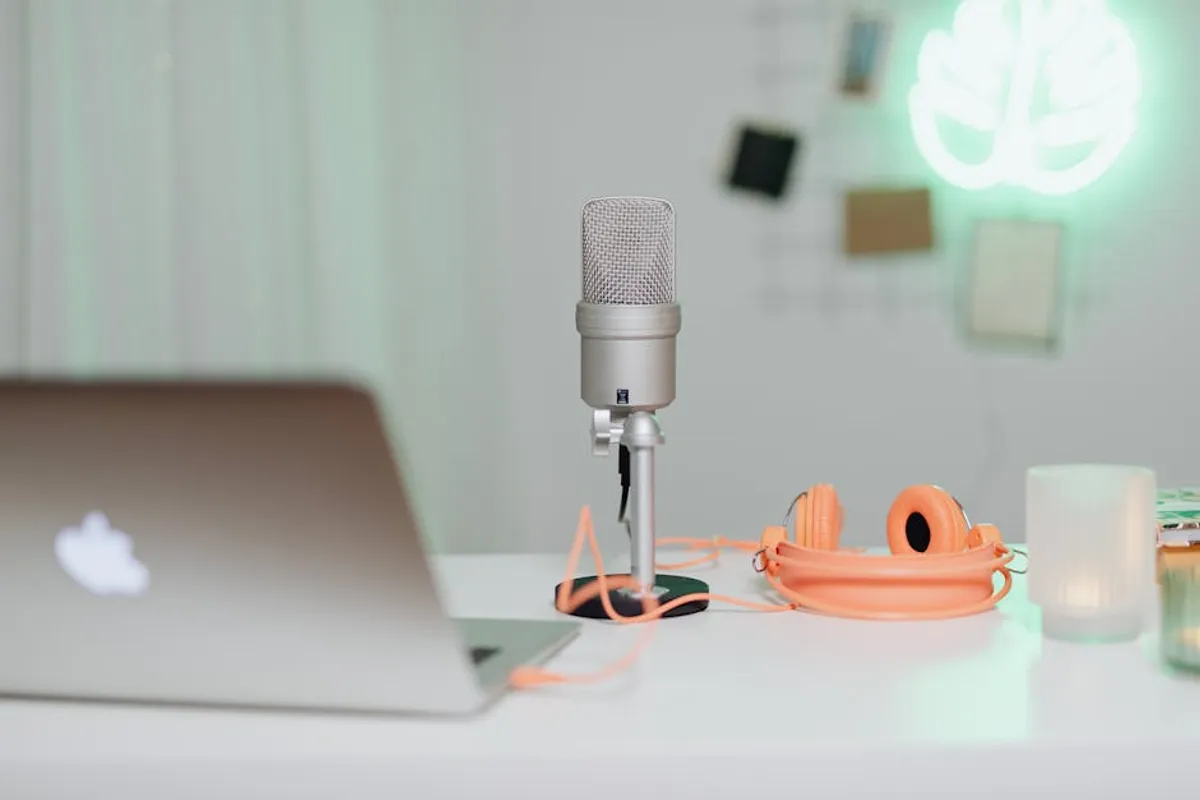
Creating compelling content, whether for YouTube, podcasts, live streams, or online courses, hinges significantly on audio quality. Visuals might grab initial attention, but poor sound quickly disengages an audience. A high-quality microphone elevates professionalism, ensures clarity, and builds trust with listeners, directly impacting audience retention and growth. The right microphone transforms raw ideas into polished productions, making your message resonate without distraction from background noise or muffled speech. Selecting the optimal microphone involves balancing your specific content format, recording environment, technical setup, and budget to achieve pristine audio that complements your visual storytelling.
What to Look For in a Content Creation Microphone
Choosing a microphone is not a one-size-fits-all decision; the best choice aligns with your content type and workflow. Consider these technical and practical aspects:
- Polar Pattern: This describes how the microphone picks up sound from different directions. Cardioid patterns are common for solo vocals, rejecting sound from the sides and rear. Omnidirectional patterns capture sound from all directions, suitable for interviews with multiple speakers. Bidirectional (figure-8) patterns pick up from the front and back, useful for face-to-face interviews. Some microphones offer switchable patterns, increasing versatility.
- Connectivity: USB microphones offer plug-and-play simplicity, ideal for beginners or mobile setups, connecting directly to a computer or mobile device. XLR microphones provide professional-grade audio and require an audio interface (mixer or preamp) with phantom power, offering more control and often superior sound quality for dedicated studios. Wireless systems (typically 2.4 GHz or UHF) provide mobility, crucial for on-location shoots or dynamic presentations.
- Frequency Response: This indicates the range of frequencies a microphone can capture. A wider, flatter frequency response generally means more accurate sound reproduction. For speech, clarity in the mid-range is paramount, while for music, a broader response across lows and highs is beneficial.
- Build Quality and Durability: Microphones for content creation often travel or endure frequent handling. Look for robust construction, metal bodies, and reliable components. Included accessories like shock mounts, pop filters, and sturdy stands can significantly improve performance and longevity.
- Software Integration and Features: Some USB microphones come with dedicated software for advanced control over gain, monitoring, EQ, and noise gates. This can streamline your workflow, especially for live streaming. Features like a headphone jack for zero-latency monitoring are essential for real-time audio checks.
- Self-Noise: Measured in dB SPL (A-weighted), lower self-noise means the microphone introduces less hiss or hum into the recording, crucial for quiet environments or delicate sound capture.
- Budget: Microphones range from under $50 to several thousand. Define your budget early, understanding that higher price points often correlate with better components, lower self-noise, and more durable construction, but excellent options exist at every level.
1. Shure SM7B
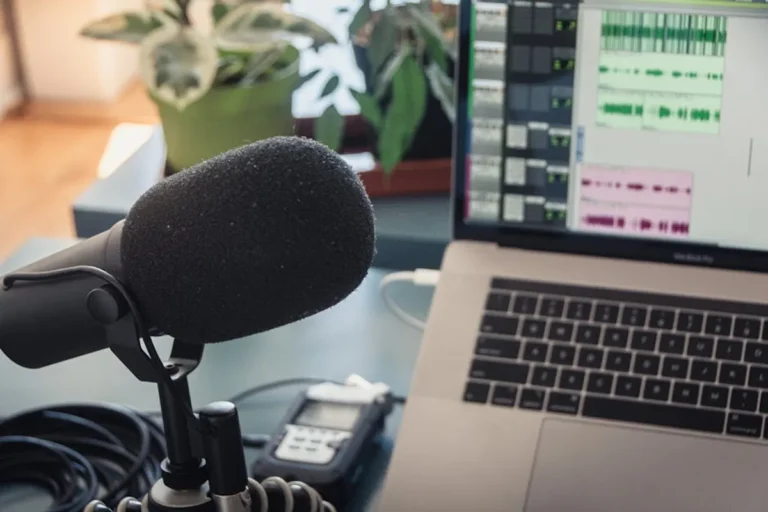
The Shure SM7B is an industry-standard dynamic microphone, revered for its robust build and exceptional vocal clarity. Originally designed for broadcast, its flat, wide-range frequency response and excellent rejection of off-axis noise make it a go-to for podcasters, streamers, and vocalists. It includes an internal air suspension shock isolation and a pop filter, effectively minimizing mechanical noise and plosives without external accessories. Its output level is notably low, requiring a high-gain preamp to achieve optimal signal-to-noise ratio, a common consideration for professional setups.
Best for: Professional podcasting, radio broadcasting, vocal recording, streaming, and environments with moderate background noise where clear, focused vocals are paramount.
Pros:
- Exceptional vocal reproduction with a warm, rich tone.
- Superior off-axis rejection, minimizing room reflections and background noise.
- Durable construction built to withstand demanding use.
- Integrated pop filter and shock mount reduce plosives and handling noise.
- Highly resistant to electromagnetic hum from computer monitors and other equipment.
Cons:
- Requires a high-gain audio interface or preamplifier (e.g., Cloudlifter) due to low output.
- XLR-only connectivity means no direct USB option.
- Higher price point compared to many entry-level options.
- Large form factor may require specific mounting solutions.
Verdict: The SM7B delivers studio-grade vocal performance, making it an investment for creators prioritizing pristine audio and willing to accommodate its higher gain requirements and XLR-only setup. It establishes a professional audio baseline.
2. Rode NT-USB+
The Rode NT-USB+ is a studio-quality condenser microphone offering direct USB-C connectivity, simplifying setup without sacrificing audio fidelity. It boasts a tight cardioid polar pattern, ensuring focused sound capture, and a 24-bit/48kHz analog-to-digital converter for high-resolution audio. The integrated headphone jack provides zero-latency monitoring, critical for real-time audio adjustments. Its robust construction and included pop filter and desktop tripod make it a complete package for creators seeking professional results with USB convenience.
Best for: High-quality voiceovers, podcasting, streaming, and home studio recording where USB connectivity is preferred but studio-grade sound is essential.
Pros:
- Studio-grade condenser capsule delivers detailed and clear audio.
- Plug-and-play USB-C connectivity, compatible with computers and mobile devices.
- Zero-latency headphone monitoring for accurate audio checks.
- Includes a high-quality pop filter and a sturdy desktop tripod.
- Robust metal construction ensures durability.
Cons:
- USB-only operation means no XLR connectivity for advanced setups.
- Condenser design can pick up more room ambiance than a dynamic mic.
- Fixed cardioid pattern offers less versatility than multi-pattern USB mics.
Verdict: An excellent choice for creators who need superior sound quality and the convenience of USB. Its performance rivals many XLR condensers, making it a strong contender for serious home studio work without the complexity of an audio interface.
3. Blue Yeti
The Blue Yeti is a foundational USB microphone known for its versatility and ease of use. It features three condenser capsules and four selectable polar patterns (cardioid, omnidirectional, bidirectional, and stereo), allowing it to adapt to various recording scenarios. Its plug-and-play USB interface, integrated headphone jack for zero-latency monitoring, and gain control make it highly accessible for beginners. The sturdy, built-in desktop stand further enhances its out-of-the-box utility.
Best for: Beginners in podcasting, streaming, voiceovers, and casual music recording who require a versatile, easy-to-use microphone with multiple polar pattern options.
Pros:
- Multiple polar patterns provide flexibility for different recording situations.
- Simple plug-and-play USB connectivity.
- Zero-latency headphone monitoring and onboard gain control.
- Integrated desktop stand for immediate use.
- Affordable price point for its feature set.
Cons:
- Can be sensitive to background noise due to its condenser design and multiple capsules.
- Large footprint on a desk.
- Sound quality, while good for its price, does not match professional XLR microphones.
- USB-only operation.
Verdict: The Blue Yeti remains a popular entry point for content creators due to its versatility and straightforward operation. It offers a solid foundation for improving audio quality without a steep learning curve or significant investment.
4. Elgato Wave:3
The Elgato Wave:3 is a premium USB condenser microphone specifically designed for streamers and podcasters, integrating tightly with Elgato's ecosystem. It features proprietary Clipguard technology, which prevents audio clipping by automatically rerouting sound through a secondary signal path at a lower volume. The Wave Link digital mixer software allows users to blend up to nine audio sources (microphone, game audio, music, etc.) into two independent outputs (one for stream, one for monitoring), providing unparalleled control over live audio. Its cardioid pattern focuses on the speaker, and the compact design is desk-friendly.
Best for: Live streamers, podcasters, and gamers who require advanced software control over multiple audio sources and robust anti-clipping features.
Pros:
- Clipguard technology prevents audio distortion from sudden volume spikes.
- Wave Link software offers a powerful virtual mixer for managing multiple audio inputs and outputs.
- Excellent sound quality with a clear, balanced frequency response.
- Capacitive mute button for silent muting.
- Compact and aesthetically pleasing design.
Cons:
- USB-only connectivity.
- Full potential is realized only with the Wave Link software, which requires a computer.
- Cardioid-only pattern limits versatility for multi-person recordings.
- Higher price point than many other USB microphones.
Verdict: The Wave:3 is a purpose-built solution for live content creators, offering advanced audio processing and mixing capabilities that streamline complex setups. Its Clipguard technology provides a crucial safety net for dynamic live performances.
5. Shure MV7
The Shure MV7 is a hybrid USB/XLR dynamic microphone, blending the professional sound of the SM7B with the convenience of USB connectivity. It features both XLR output for traditional audio interfaces and USB-C for direct connection to computers and mobile devices. The ShurePlus MOTIV app provides digital signal processing (DSP) features like Auto Level Mode, which adjusts gain and compression in real-time, and a customizable EQ. Its cardioid polar pattern effectively isolates the speaker's voice, making it excellent for untreated rooms.
Best for: Podcasters, streamers, and vocalists seeking a versatile microphone that offers both professional XLR capabilities and user-friendly USB plug-and-play functionality, especially in less-than-ideal recording environments.
Pros:
- Dual USB and XLR outputs for maximum flexibility.
- Dynamic capsule provides excellent background noise rejection.
- ShurePlus MOTIV app offers powerful DSP features for optimizing sound.
- Built-in headphone output for zero-latency monitoring.
- Intuitive touch panel controls for gain, headphone volume, and mute.
Cons:
- Sound quality, while excellent, doesn't quite match the SM7B's warmth and depth.
- USB cable length can be restrictive.
- Requires software for full DSP control, which may not be ideal for all users.
Verdict: The MV7 is an outstanding choice for creators who need professional audio performance with the flexibility to switch between simple USB setups and more advanced XLR workflows. Its DSP features make it particularly forgiving for new users.
6. Audio-Technica AT2020
The Audio-Technica AT2020 is a large-diaphragm condenser microphone widely recognized as an entry-level studio workhorse. It offers a clear, articulate sound with a wide frequency response, making it suitable for vocals, acoustic instruments, and voiceovers. Its cardioid polar pattern effectively reduces pickup of sounds from the sides and rear, focusing on the sound source directly in front. The AT2020 requires 48V phantom power, meaning it must be connected via XLR to an audio interface or mixer.
Best for: Home studio recording of vocals, acoustic instruments, voiceovers, and podcasting where an XLR setup is already in place or planned, prioritizing clear condenser sound.
Pros:
- Clear, detailed, and articulate sound reproduction.
- Durable construction for long-term reliability.
- Excellent value for a studio-grade condenser microphone.
- High SPL handling for recording loud sources.
Cons:
- Requires an audio interface with phantom power (XLR-only).
- Condenser design is sensitive and can pick up room noise if the environment isn't treated.
- No included shock mount or pop filter with the basic package, which are often necessary.
Verdict: The AT2020 provides a reliable and high-quality entry into the world of XLR condenser microphones. It's a solid choice for creators ready to invest in an audio interface for superior sound capture in a controlled environment.
7. Rode VideoMic NTG
The Rode VideoMic NTG is a versatile on-camera shotgun microphone that also functions as a USB microphone, making it exceptionally useful for diverse content creation. It features a highly directional supercardioid polar pattern, minimizing ambient noise and focusing audio capture directly in front of the camera or speaker. Its unique auto-sensing 3.5mm output adapts to TRS or TRRS, making it compatible with cameras, smartphones, and tablets. Additional features include a digital switchable high-pass filter, high-frequency boost, and a safety channel for distortion-free recording. When connected via USB-C, it acts as a full-fledged USB microphone with headphone monitoring.
Best for: Videographers, vloggers, run-and-gun content creators, and mobile journalists who need a high-quality, directional microphone for both on-camera use and direct-to-computer recording.
Pros:
- Highly directional sound capture, excellent for isolating subjects.
- Dual 3.5mm (TRS/TRRS auto-sensing) and USB-C connectivity for broad compatibility.
- Built-in rechargeable battery for extended use.
- Safety channel records a second track at -20dB to prevent clipping.
- Integrated Rycote Lyre shock mounting for camera stability.
Cons:
- Shotgun design can be sensitive to handling noise if not properly mounted.
- Not ideal for multi-person interviews without additional mics.
- Higher price point for a dedicated on-camera microphone.
Verdict: The VideoMic NTG is an indispensable tool for video-focused creators, offering professional-grade directional audio for cameras and the added flexibility of a USB microphone. Its adaptability makes it a powerful all-in-one solution for hybrid workflows.
8. Rode Wireless GO II
The Rode Wireless GO II is an ultra-compact and versatile wireless microphone system, consisting of two transmitters (each with a built-in omnidirectional microphone) and a dual-channel receiver. This system provides professional-grade audio over a 2.4GHz digital transmission, offering a line-of-sight range of up to 200m. It features onboard recording in each transmitter for backup, flexible gain control, and compatibility with cameras, mobile devices, and computers via its analog 3.5mm TRS output and USB-C digital output. Its small size and ease of use make it ideal for interviews, vlogging, and field recording.
Best for: Mobile content creators, interviewers, vloggers, and anyone needing high-quality, portable wireless audio for two subjects simultaneously.
Pros:
- Extremely compact and lightweight design for ultimate portability.
- Dual-channel receiver supports two transmitters simultaneously.
- Onboard recording in transmitters provides a crucial backup against dropouts.
- Versatile connectivity: 3.5mm TRS, USB-C (digital audio output).
- Up to 7 hours of battery life.
Cons:
- 2.4GHz frequency can be susceptible to interference in crowded wireless environments.
- Omnidirectional built-in mics pick up more ambient noise than a directional mic.
- Requires external lavalier microphones for optimal discreet placement (though built-in mics are usable).
- Higher cost for a wireless system.
Verdict: The Wireless GO II is a game-changer for creators requiring reliable, high-quality wireless audio on the go. Its dual-channel capability and onboard recording make it a robust solution for dynamic content creation scenarios.
9. HyperX QuadCast S
The HyperX QuadCast S is a visually striking USB condenser microphone designed with streamers and gamers in mind. It features customizable RGB lighting, which can be controlled via HyperX NGENUITY software, adding aesthetic appeal to live broadcasts. Beyond aesthetics, it offers four selectable polar patterns (stereo, omnidirectional, cardioid, bidirectional), a built-in pop filter, and an anti-vibration shock mount to reduce unwanted noise. The convenient tap-to-mute sensor with an LED indicator provides instant audio control, while the gain control dial allows for quick adjustments.
Best for: Gamers, live streamers, and content creators who prioritize both high-quality audio and an engaging visual presence on camera, seeking a versatile USB microphone.
Pros:
- Customizable RGB lighting enhances stream aesthetics.
- Four selectable polar patterns for versatile recording.
- Built-in pop filter and anti-vibration shock mount reduce noise.
- Tap-to-mute sensor with LED indicator for quick, silent muting.
- Clear and crisp audio quality for voice.
Cons:
- USB-only connectivity.
- RGB lighting, while a pro for some, is unnecessary for others and contributes to cost.
- Sound quality is good for USB but not comparable to high-end XLR setups.
- Can be sensitive to room noise due to its condenser design.
Verdict: The QuadCast S is an excellent choice for creators who want a feature-rich USB microphone that performs well and looks distinctive on camera. Its versatility and user-friendly features make it a strong contender for interactive content.
10. Samson Q2U
The Samson Q2U is a dynamic handheld microphone that offers both USB and XLR connectivity, making it an incredibly versatile and budget-friendly option. Its dynamic capsule provides good rejection of background noise, suitable for less-than-perfect acoustic environments. It includes a headphone output for zero-latency monitoring, an on/off switch, and comes with a desktop tripod stand, mic clip, and all necessary cables. This hybrid design allows creators to start with simple USB recording and upgrade to an XLR audio interface later without needing a new microphone.
Best for: Budget-conscious podcasters, mobile journalists, vocalists, and anyone needing a versatile microphone that can function as both a USB and XLR device, especially in varied recording environments.
Pros:
- Dual USB and XLR outputs offer exceptional flexibility.
- Dynamic capsule provides good off-axis rejection and durability.
- Affordable price point for its feature set.
- Includes a desktop stand, mic clip, and cables, making it ready to use.
- Zero-latency headphone monitoring.
Cons:
- Handheld form factor may not be ideal for all desk setups without an additional boom arm.
- Sound quality, while good for its price, is not on par with higher-end professional microphones.
- USB connectivity is limited to 16-bit/48kHz.
Verdict: The Q2U is an outstanding value proposition, providing a reliable dynamic microphone with both USB and XLR options. It's an ideal starting point for creators who want flexibility and a clear upgrade path without immediate significant investment.
11. Sennheiser MKE 200
The Sennheiser MKE 200 is a compact, highly directional on-camera microphone designed for mobile content creators and vloggers. It features a supercardioid polar pattern that focuses audio capture directly on the subject, reducing surrounding noise. Its integrated wind protection and internal shock mount help minimize handling noise and environmental interference without requiring external accessories. The MKE 200 does not require batteries, drawing power directly from the camera or mobile device via its 3.5mm TRS/TRRS cable (both included), ensuring a simple plug-and-play experience.
Best for: Vloggers, mobile journalists, and filmmakers who need a compact, directional on-camera microphone for improved audio quality directly from their DSLR/mirrorless camera or smartphone.
Pros:
- Compact and lightweight design, ideal for mobile setups.
- Supercardioid pattern effectively isolates the subject's voice.
- Integrated wind protection and shock mount reduce noise.
- Battery-free operation for convenience.
- Includes both TRS and TRRS cables for camera and mobile device compatibility.
Cons:
- 3.5mm analog output only, no USB or XLR.
- Not suitable for multi-person audio capture.
- Sound quality is good for its size but not comparable to larger studio microphones.
- Fixed pattern limits versatility.
Verdict: The MKE 200 is an excellent upgrade for mobile video creators looking to significantly improve their on-camera audio without adding bulk or complexity. Its directional focus and integrated noise reduction are key assets for clear field recordings.
12. FIFINE K678
The FIFINE K678 is a popular USB condenser microphone offering a compelling balance of sound quality and affordability. It features a cardioid polar pattern, focusing on the speaker's voice while minimizing room noise. The microphone includes a gain control knob, a headphone jack for zero-latency monitoring, and a mute button. Its all-metal construction and sturdy integrated desktop stand give it a premium feel, making it a solid choice for entry-level podcasting, streaming, and voiceover work without a significant financial outlay.