Building a first audio system is overwhelming. The audio industry produces vast information about products, technologies, and approaches. Most of the information optimizes for continued upgrade cycles rather than for first-time buyer satisfaction.
This guide takes a different approach. The objective is to produce a system that delivers excellent listening enjoyment without requiring continuous upgrades or substantial expense. Six steps with specific recommendations follow.
Step 1: Identify your actual listening situation
Before buying anything, characterize your actual listening:
Where will you listen? Home? Office? Travel? Different contexts have different requirements.
How will you use it? Critical listening? Background music? Both?
What sources will you use? Streaming? Local files? Vinyl? CDs? Different sources have different equipment implications.
What's your listening volume? Quiet to moderate? Loud? Volume affects equipment requirements.
What music do you actually listen to? Genre matters less than the industry claims, but some genres have specific equipment implications.
What's your noise environment? Quiet home? Noisy commute? Office?
The answers shape what equipment makes sense. Generic recommendations without this characterization often produce poor matches.
Step 2: Set a realistic budget
Audio equipment quality has substantial variation by budget tier:
Under $200: Adequate for casual listening. Limitations on critical listening quality.
$200-500: Substantial improvement over budget tier. Adequate for most listeners.
$500-1,200: Quality systems for serious listeners. Diminishing returns above $1,200 are real.
$1,200-3,000: Premium territory. Real improvements but substantially higher cost per quality unit.
Above $3,000: Audiophile territory. Improvements relative to cost are very small.
For first-time systems, budgets in the $300-1,200 range typically produce excellent value. Going below limits quality; going above produces limited additional benefit.
Set a budget and stick to it. The industry will pressure expansion. Resist.
Step 3: Buy headphones (the most important component)
The headphones are the most important component. Most audible quality comes from the headphones. Allocate substantial budget here.
Specific recommendations by budget:
$80-150: Sennheiser HD 559, AKG K371, Beyerdynamic DT 770 Pro 80 ohm.
$150-300: Sennheiser HD 600, Drop + Sennheiser HD 6XX, Beyerdynamic DT 990 Pro, HiFiMan HE400se.
$300-600: Audeze MM-100, Focal Elex (when available), Sennheiser HD 660S2.
$600-1,200: Audeze LCD-X, ZMF Atticus, Hifiman Ananda.
For first systems, the $150-300 tier offers excellent value. The HD 600 specifically is hard to beat.
Consider open-back vs closed-back based on your listening environment. Open-back headphones leak sound and let outside sound in. Closed-back are appropriate for shared spaces or noisy environments.
Step 4: Add appropriate amplification
The headphones determine whether you need a separate amplifier:
Easy-to-drive headphones (under 100 ohms, high sensitivity): Your phone or computer headphone output is fine. No amp needed initially.
Moderate-difficulty headphones (100-300 ohms): A modest amp helps. Topping DX3 Pro+ or similar at $200 is excellent value.
Demanding headphones (most planars, high-impedance dynamic): Substantial amp needed. Schiit Magnius or Topping A30 Pro at $200-300 work well.
Match the amp to the headphones. Underpowered amplification limits headphone performance. Over-powered amplification wastes money.
For first systems with headphones from the $150-300 tier, a $200 amp/DAC combo handles most needs adequately.
Step 5: Solve the source question
The source provides music to the system:
Streaming services: Spotify, Apple Music, Tidal, Qobuz. Apple Music and Tidal offer lossless quality at reasonable prices. Spotify is convenient but compresses audio.
Local files: FLAC files from your own collection or purchased music stores. Highest control but requires file management.
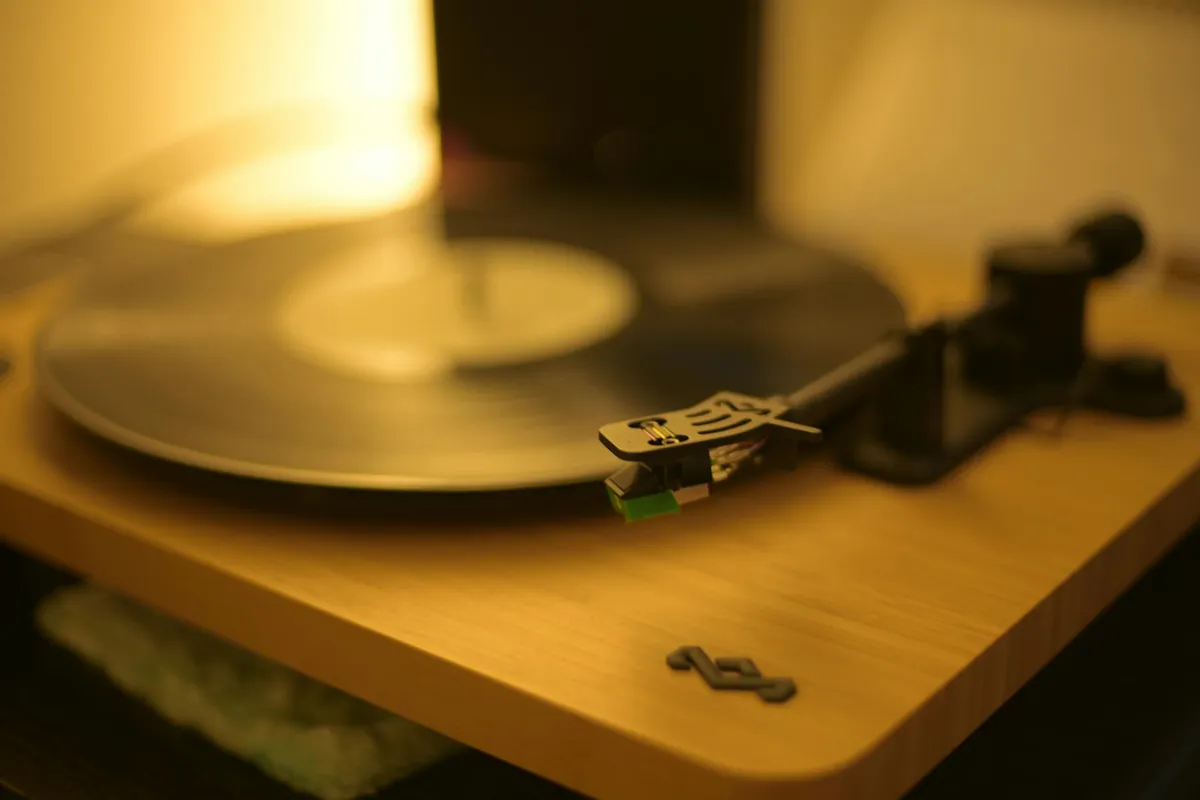
Vinyl: If you have records and want to play them, a turntable plus phono preamp adds substantial cost.
CDs: If you have CDs, a CD player or computer drive can play them.
For first systems, Apple Music or Tidal lossless plus a competent DAC provides excellent source quality at modest cost.
Don't over-invest in source quality if your headphones aren't in the upper tiers. The quality differences become audible only with quality downstream equipment.
Step 6: Set up the system thoughtfully
Beyond the equipment, the listening setup matters:
Quiet listening environment. Background noise masks audio quality. Find a quiet space for serious listening.
Comfortable seating. Listening sessions of 30+ minutes need appropriate seating. Bad chairs reduce listening enjoyment.
Appropriate lighting. Soft, warm lighting supports listening better than harsh overhead light.
Volume management. Moderate volumes (60-80 dB peaks) preserve hearing while allowing detail perception.
Listening time. Schedule actual listening time. Equipment unused doesn't produce listening enjoyment.
Music acquisition. Build a collection of music you love. The collection matters more than the equipment over time.
The setup elements complete the system. Without them, even excellent equipment doesn't produce excellent listening.
What to skip in first systems
Several things often included in first system advice that can be safely skipped:
Cable upgrades. Stock cables are typically adequate. Save money for components that matter.
Power conditioning. Modern equipment handles standard power adequately for most situations.
Multiple headphone collection. One quality pair beats two budget pairs. Build a collection over years if interest persists.
Subwoofer for headphones. Headphones reproduce bass adequately without external subwoofers.
Headphone burn-in tools. Burn-in is largely myth. Don't buy specific burn-in products.
Each skip saves money for things that actually matter.
Common first-system mistakes
Specific mistakes new buyers make:
Buying based on online subjective reviews. Subjective experience varies. What sounds amazing to a reviewer may not match your taste.
Underestimating the importance of headphones relative to other components. Headphones produce most of audible quality. Allocate accordingly.
Buying premium DAC before competent amplifier. Adequate amp power matters more than DAC quality for difficult headphones.
Over-spending on first systems. Diminishing returns above $1,200 are real. First systems don't need to maximize spending.
Buying based on anticipated future use. Buy for actual use. If listening patterns change later, upgrade then.
Following the audiophile community without skepticism. Communities have specific biases that may not match your needs.
Each mistake is correctable through more deliberate buying decisions.
Specific complete system recommendations
By budget tier:
$300 system: AKG K371 ($150) + competent budget amp ($100) + streaming subscription ($50/year). Adequate quality for most listening.
$500 system: Sennheiser HD 600 ($330) + Topping NX4 DSD portable amp/DAC ($170). Excellent quality for the price.
$800 system: Drop HD 6XX ($220) + Topping DX3 Pro+ ($200) + lossless streaming ($50/year). Outstanding value.
$1,200 system: Audeze MM-100 ($400) + Schiit Magnius/Modius stack ($400) + lossless streaming ($50/year). Premium quality.
Each system represents excellent value at its price point.
What to do after the first system
After acquiring the first system, the appropriate move is usually:
Listen to it for substantial time (months to years).
Build a music collection of recordings you love.
Develop attention to listening as practice.
Identify what specifically you might want to upgrade based on actual experience.
Resist generic upgrade pressure.
The listening enjoyment from a competent system listened to attentively is excellent. Most upgrade pressure doesn't produce proportional benefit.
If you do want to upgrade later
Some upgrade paths that can produce real improvement:
Better headphones if your current ones limit specific listening. Pay attention to what specifically isn't satisfying.
More amplifier power if your headphones are demanding and current amp is inadequate.
Better source recording quality through specific lossless formats or higher-quality streaming.
Acoustic treatment if listening environment has specific problems.
Specific upgrades addressing identified limitations produce real improvement. Generic upgrades to "better" equipment often don't.
The honest summary
Building a first audio system can be done well at modest cost. The six steps documented here produce excellent results for most first-time buyers.
The audio industry will pressure substantial spending and continuous upgrades. Most of the pressure doesn't serve actual listening enjoyment. Resisting it produces better outcomes.
For most first-time buyers, $300-800 buys an excellent listening system. The system supports years of listening enjoyment without continuous upgrade pressure.
The listening matters more than the equipment. Once you have a competent system, attention to actual music is what produces enjoyment.
Build the system. Listen to it. Enjoy the music. The audio industry can't sell you that part. It comes from you.
Welcome to good listening.